


Sustainability for competitiveness is one of Fårbo Manufacturing’s core values. For Fårbo, sustainability is about combining development and competitiveness with responsibility for people, resources, and the environment. The company is now taking further steps by partnering with the AI company Pylero to develop an AI agent that will collect and manage CO₂ data from suppliers and make the information available in documents such as quotes and invoices.
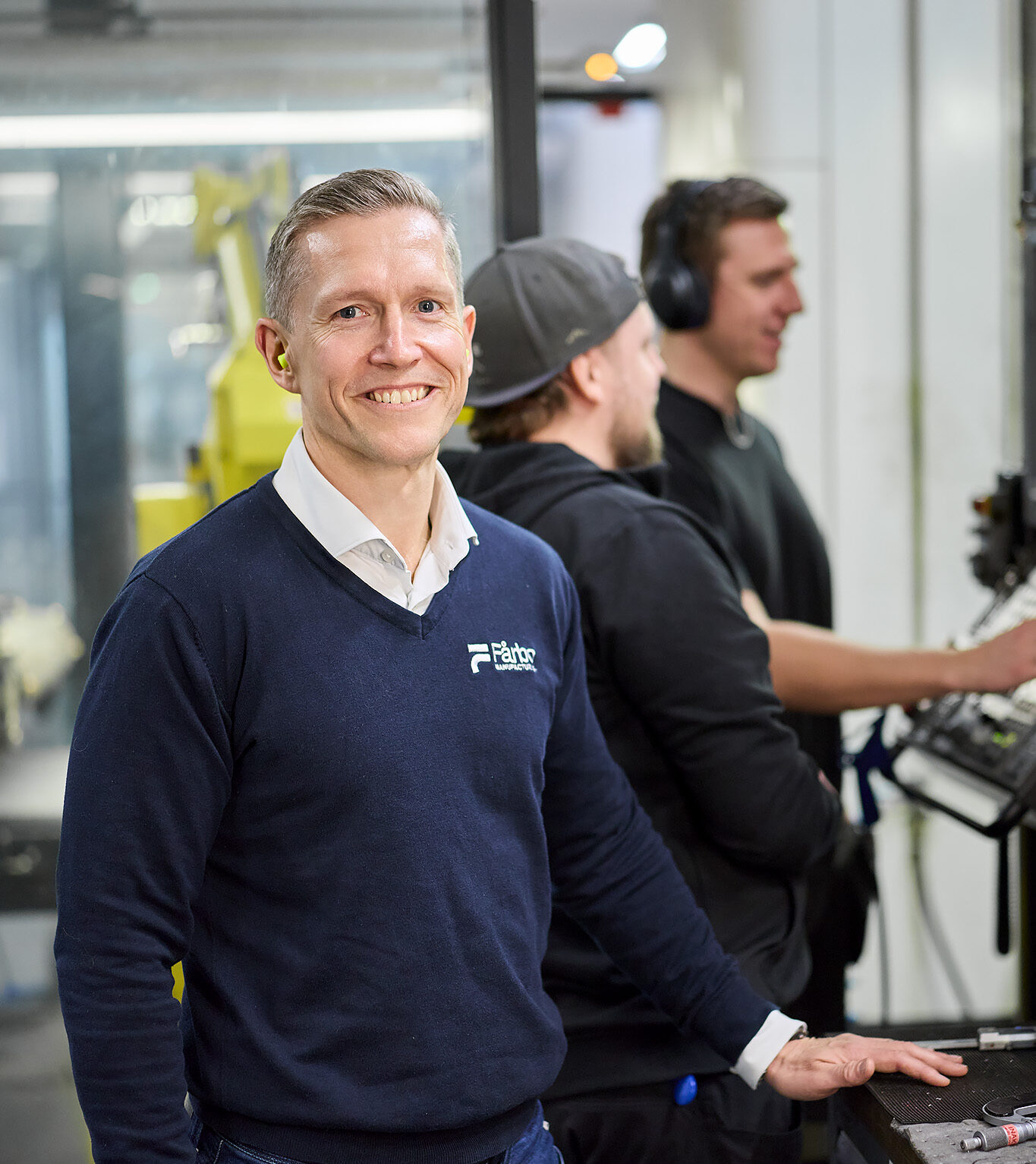
Mikael Vetterskog joined Fårbo in 2021 and took over as CEO in 2023. Since then, he has driven efficiency initiatives forward through measures such as increased employee engagement, digitalization, and the use of various AI agents tailored to the business.
As a result, Fårbo’s productivity has increased by more than 100 percent in recent years and continues to rise, while revenue is growing sharply. Another significant positive effect is reduced stress throughout the company—something that is evident in day-to-day operations and reflected in the annual health screenings.
“We don’t rest on our laurels—we’re constantly moving forward,” says Mikael. “Our work on quality, the environment, and efficiency is an ongoing process, and we have many value-creating initiatives currently in development and implementation.” One very important project right now is the development of a new AI agent—or the Sustainability Agent, as we call it. It will help us collect, organize, and report CO₂ data related to the products we process for our customers. Access to relevant climate data makes it possible to move from ambition to concrete facts. For Fårbo, this is about both gaining a better understanding of climate impact throughout the value chain and providing customers with information they can use in their own sustainability decisions.
Pylero and Fårbo are jointly developing AI agents
“Now, together with Pylero, we’re taking another step forward by using AI to make our climate efforts more concrete and measurable,” says Mikael. “We also have a few other interesting projects underway with Pylero, but more on that later.”
Pylero is a Swedish AI company focused on the manufacturing industry. The basic idea is to connect companies’ existing data with AI agents that can analyze information, suggest actions, and even automate parts of their business processes.
Projektledare hos Pylero för CO₂-projektet är Isak Rizell, vd och en av grundarna av Pylero. Isak har en bakgrund som IT-konsult och har arbetat inom tillverkande industri med bland annat BI-system och analys, ERP-system och IT-strategier.

As AI technology became more accessible, Isak saw new opportunities to use it to develop and streamline processes in the manufacturing industry.
“Relevant and reliable information is essential for an AI agent to do its job,” Isak explains. Pylero has therefore also developed technology to collect data directly from the production floor. One example is an intelligent sensor that can be mounted on a machine—such as a CNC lathe—and collect measurement values without needing to be connected to the machine’s control system. The information can then be combined with data from, for example, ERP systems and other sources and processed by the AI agent.
The Sustainability Agent manages the flow of information
In the CO₂ project, the Sustainability Agent’s primary responsibility is to streamline the collection and management of climate data. The agent identifies which items need to be supplemented with CO₂ information and can then request CO₂ data from Fårbo’s suppliers.
The agent monitors incoming email responses and can send reminders to suppliers when information is missing. The information is compiled and then entered into Fårbo’s ERP system, Monitor G5.
AI thus automates large parts of the information flow, but people retain control. Fårbo’s employees review and approve key steps and tasks before the information is passed on.
CO₂ data for each item
The goal is for Fårbo to be able to link relevant CO₂ data to individual items and make the information available as early as the quote stage and later on the invoice as well. This gives Fårbo’s customers the opportunity to factor in climate impact alongside factors such as price, quality, and delivery time—and makes sustainability something that can be compared, not just talked about.
At the same time, the information collected provides Fårbo with a better factual basis for its own sustainability and improvement efforts. The more the company learns about the climate impact throughout the value chain, the better its ability to identify areas for improvement.
This work is in line with the UN Sustainable Development Goals that Fårbo has chosen to prioritize in its sustainability efforts, including Goal 7—Affordable and Clean Energy, Goal 9—Industry, Innovation, and Infrastructure, and Goal 13—Climate Action. The Sustainability Agent is thus a concrete example of how digitalization and innovation can be used to increase awareness of climate impact.
“With greater transparency, we hope to create value for our customers as well. That’s what we mean by sustainability for competitiveness,” concludes Mikael Vetterskog.